The Taranaki region is thought to have been settled by Maori around 600-700 years ago. Archaeological evidence suggests that pa were being built in the area, which surrounds Mount Taranaki, as early as the fifteenth century. A number of iwi hold mana whenua in the west coast of the region, including Ngati Tama and Ngati Mutunga, Te Atiawa and Taranaki.
The area which would become New Plymouth was initially populated by Nga Mahanga a Tairi of Taranaki, and then Te Atiawa. A chief settlement of the Te Atiawa hapu Ngati Te Whiti was the fishing village of Mataipu, at Ngamotu. Te Atiawa affiliate with the waka Tokomaru and are said to descend from the semi-divine origins of ancestor Awanuiarangi, whose people moved south from Northland to the Bay of Plenty and Taranaki. The tribal rohe (district) occupies coastal land from Onuku Taipari north to Te Rau o te Huia, stretching inland for several kilometres to a promontory on the north-east slopes of Mount Taranaki. Te Henui, the area following the course of the Te Henui Stream, is recognised as an area of historic and ecological importance. In the wider vicinity of the Te Henui Vicarage there are the remains of three former pa sites.
European whalers initially arrived along the Taranaki coast in the first half of the nineteenth century, and generally integrated themselves relatively harmoniously with the local Maori communities. By the early 1840s, a Ngati Te Whiti pa at Ngamotu, called Otaka, was still populated but many other Maori strongholds in the region had been abandoned following attacks by taua from the Waikato a decade earlier, which had prompted a major migration of the remnant Te Atiawa population to Otaki, Wellington and Marlborough.
Organised colonial settlement at Taranaki was first instituted by the Plymouth Company in 1839-1840, who arranged to purchase land from the New Zealand Company for the settlement of immigrants from Devon and Cornwall, although this purchase would be much disputed in the future. The site of the township was chosen and laid out by Chief Surveyor Frederic Carrington in February 1841, and settler ships arrived from England from March 1841 onwards.
By this time the Plymouth Company had fallen into financial difficulties, and was formally merged with the New Zealand Company in May 1841. Settler ships continued to arrive, but disputes around the Crown’s role in transferring land out of Maori ownership, and between tangata whenua over who had the authority to transfer land were already evident.
Anglicanism in Taranaki:
With the European settlers also came the advent of religion to Taranaki, providing the familiar spiritual and cultural institutions of home to the settlers, and missionary services to the Maori population.
Wesleyan missionary teachers had arrived in New Plymouth in 1838 to begin missionary activities for the remnant Te Atiawa population, and the region’s first mission station proper was established in 1841 at Ngamotu. Although the colonists represented followers of a variety of religious doctrines, many were members of the Church of England. Accordingly, once New Zealand had been proclaimed part of the British Dominion by the signing of the Treaty of Waitangi in 1840, the Church Missionary Society was able to expand on its earlier work by seeking the appointment of a Bishop for New Zealand, who would be charged with setting up the Anglican constitution in the new diocese of New Zealand. This undivided diocese initially included the whole country as well as various islands in Polynesia. In 1841 George Augustus Selwyn (1809-1878) was appointed to this position, arriving in New Zealand in 1842 to begin his work.
Bishop Selwyn visited New Plymouth in October 1842, and set about organising the construction of churches in the parish. Sites were chosen for St Mary’s Church (Record no. 148) in central New Plymouth, and the Holy Trinity Church (Record no. 893) at Henui, now known as Fitzroy. Reverend William Bolland travelled to New Plymouth with his wife Jane, arriving in December 1843. Bishop Selwyn appointed Bolland to be the Deacon in charge of the parish in New Plymouth, and in March 1845 the foundation stone for St Mary’s church was laid under their guidance. A vicarage was also required for the parson, whose salary was contributed to by public subscription from the congregation.
Te Henui Vicarage:
When Bishop Selwyn had visited New Plymouth in 1842, he had stayed with Captain J.G. Cooke at his home in Courtenay Street. Captain Cooke’s house was situated on the bank of the Te Henui stream, at the east end of Courtenay Street, in what was then a rural area surrounding the route north towards Waitara. Selwyn gave Bolland the choice of either buying Cooke’s house, which was for sale for £150, or having a vicarage built in the grounds of the site of St Mary’s in central New Plymouth. Bolland chose to use Cooke’s house, described as being ‘about a mile from the town down a line cut thro’ the fern dignified by the name of Courtenay St’, for the Vicarage even though it was not close to St Mary’s Church. This was because it was in a convenient location for the Maori visitors who came to the site and pitched their tents in the grounds there, and also because it was midway between the Anglican churches on his circuit.
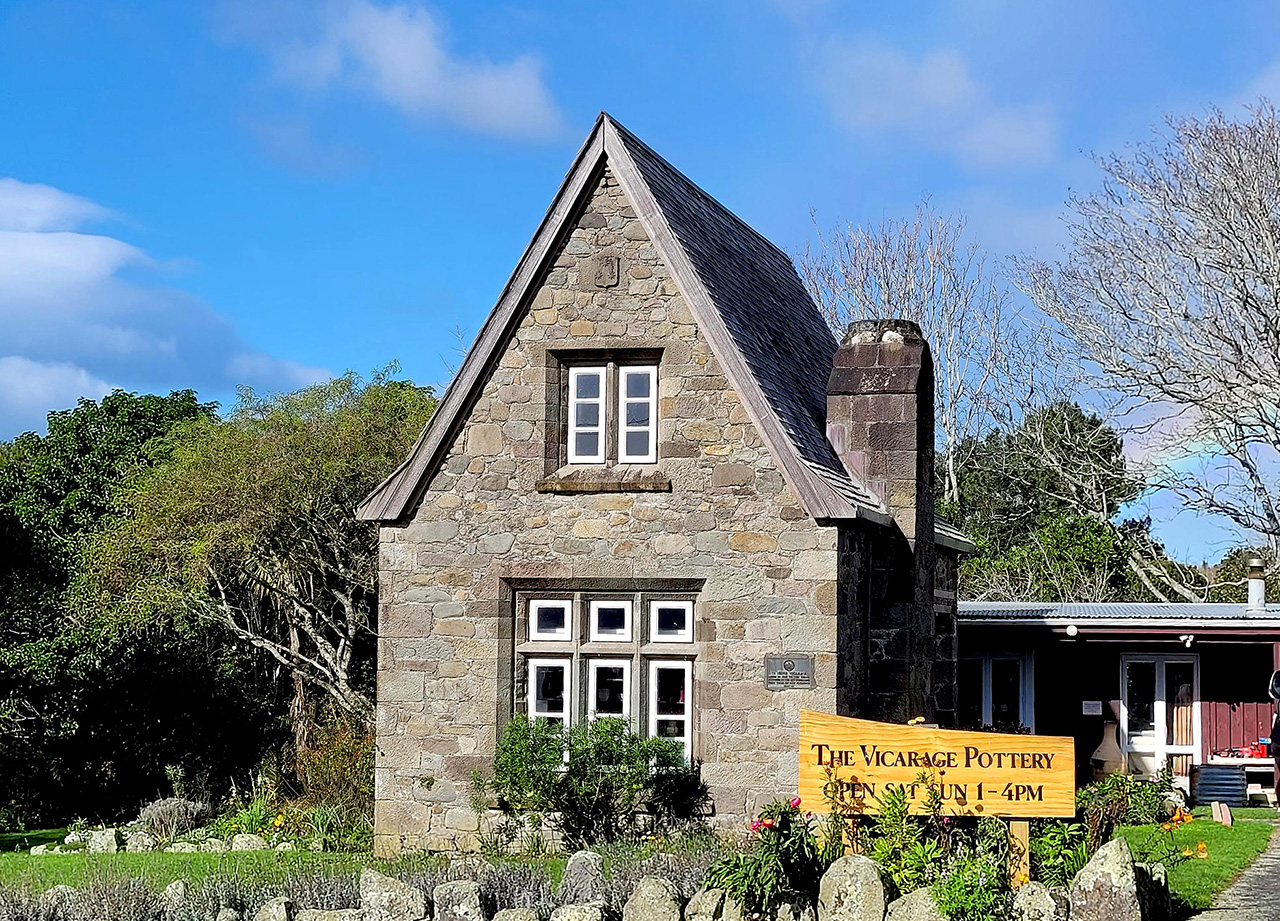
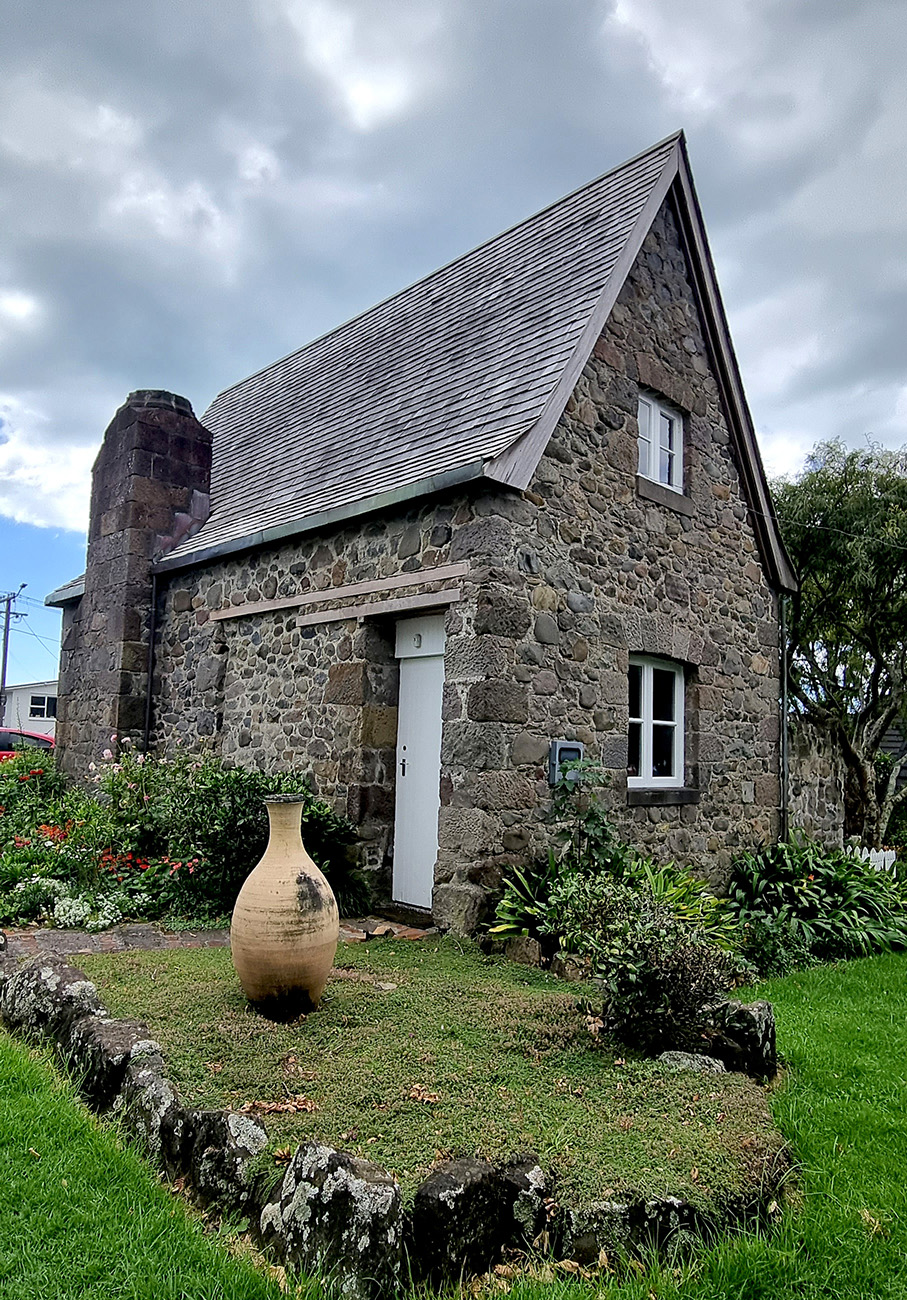
The Vicarage was not in its present form at this time, and consisted of two small wings, one of which was described as ‘a small stone building with a verandah three parts round it situated very romantically’, between which was a passage. By August 1845, however, when the house was visited by Reverend William Charles Cotton, Bishop Selwyn’s chaplain, a new andesite stone addition with thatched roof had been erected between these two wings. This stone central section is the building that remains today.
It is likely that the architect for the new portion of the Vicarage was Frederick Thatcher (1814-1890), who was also the architect for St Mary’s Church in New Plymouth. Evidence confirms that he designed the windows at the vicarage. Historian Margaret Alington also reports that the inclusion of a crest in the stonework was a stylistic device that Thatcher had also used previously, in his earlier design for a stone parsonage at Halton, Hastings. Bolland’s correspondence to Sir Donald McLean in early 1846 mentions that ‘the plans for the Nat. Hospital are very pretty - old English style - very high roof, and windows like the new part of Parsonage - only in wood’, referring to the Thatcher-designed Colonial Hospital in New Plymouth (today known as the Gables, Record no. 29) and its strong stylistic similarities to Bolland’s own new extension. Thatcher was one of the first 15 associates of the British Institute of Architects, and was responsible for the design of a number of New Zealand’s celebrated ecclesiastical buildings, including Old St Paul’s in Wellington (Record no. 38), the Chapel and buildings at St John’s College in Auckland (Record no’s 13 and 14), and Selwyn’s Bishopscourt complex at Parnell (Record no’s 23, 24, 2638, 2646). He is remembered as a key proponent of the influential ‘Selwyn style’ of architecture.
The form of the Vicarage is also of interest architecturally because of the direct connection that the structure has with Bishop Selwyn. It has been documented that Selwyn was directly involved with the design of the churches that he commissioned, and this has been suggested with St Mary’s Church, for example. Given that the two buildings were constructed at around the same time and share stylistic similarities in their construction material and steeply pitched gables, the form of the Vicarage is therefore interesting for its leanings towards the Gothic architecture that was espoused by Selwyn and Thatcher.
The style the building takes, along with others built under Selwyn’s tenure, has been variously described as Antipodean Gothic, Colonial Gothic or Selwyn’s Gothic. Selwyn was interested in bringing this revival of medieval Gothic architecture to New Zealand because of his own belief that it was the only style appropriate for ecclesiastical buildings, which was strengthened through his involvement with the Cambridge Camden Society. Thatcher – Selwyn’s architect of choice – was also a member of this society, and together they adapted the style to suit New Zealand conditions and building resources. The volcanic andesite stone used for the Vicarage makes the building part of a small group of buildings in New Plymouth constructed from this distinctive local material, which was soon superseded by the availability of abundant sources of timber for construction.
It has also been suggested that the structure of the building could have been designed by Edwin Harris, who drew a site plan and sketch of the finished addition in 1846. Harris, celebrated for his talent as an artist, was a surveyor working for F.A. Carrington at the time, so it is most likely that the 1846 drawings are merely a record of the site. However he is also noted to have worked as a civil engineer so would have had the skills for designing the stone structure, leaving Thatcher to contribute the windows and crest, although this seems an inefficient arrangement and it is most likely Thatcher was responsible for the whole addition. Harris’ plan documents Bolland’s efforts for establishing the place as a Mission Station, featuring a hospital, school-room and accommodation house.
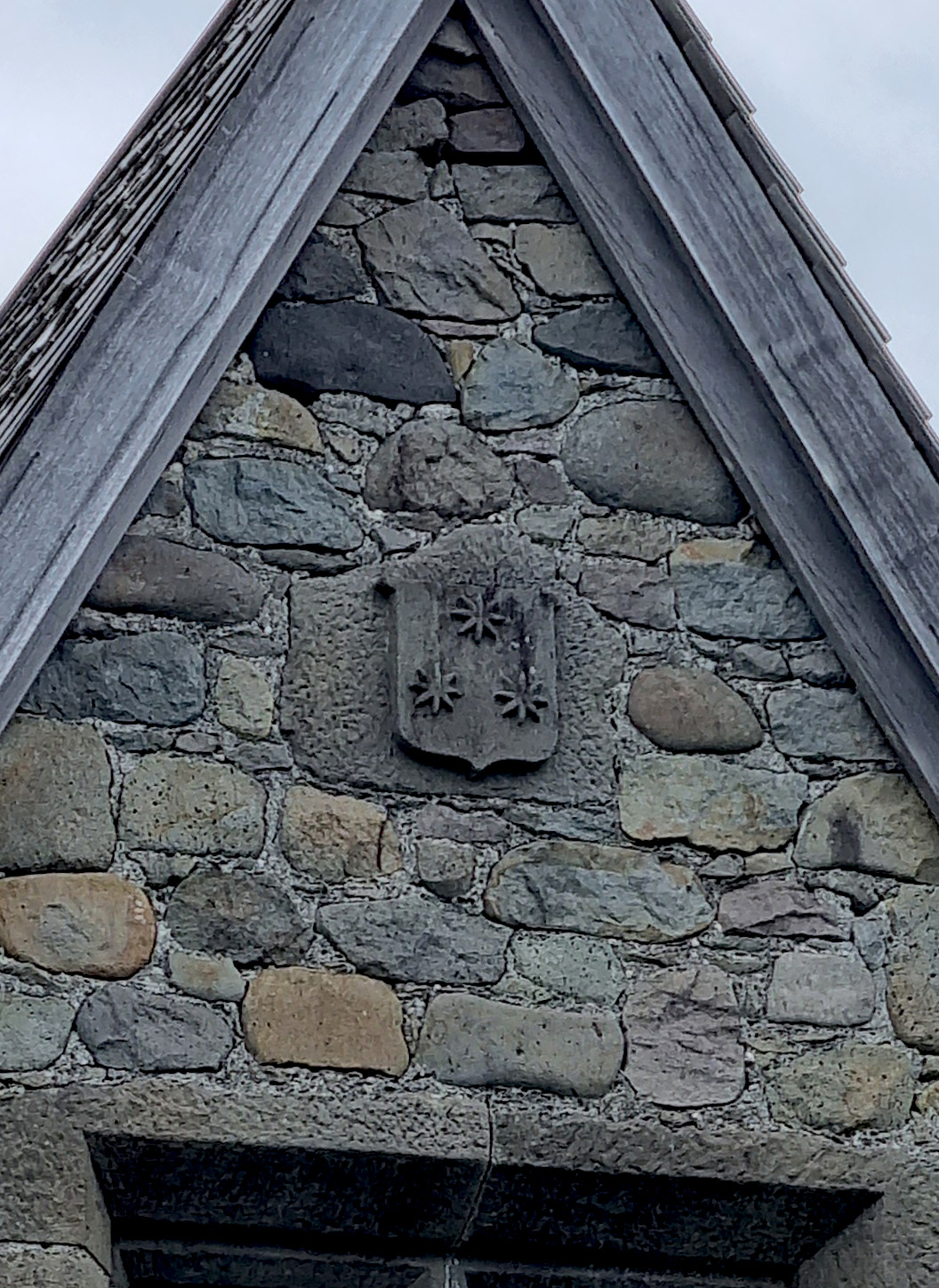
A unique aspect of the Vicarage is the carving of the crest of Selwyn’s undivided diocese of New Zealand located just under the apex of the gable on the north façade, incorporated into the stonework. The symbol of three stars on a shield-shaped background is visible in Harris’s 1846 drawing. It has been suggested that the three stars represent the three main islands of New Zealand, or the three areas of the original mission (New Zealand, Polynesia and Melanesia), or the Trinity and the three foundations of Anglican belief: scripture, tradition and reason. Due to the relatively short time period of the existence of the undivided diocese - it was first subdivided in 1856 with the creation of the Christchurch diocese - the Te Henui Vicarage is a highly rare example of a surviving building featuring this symbol. The crests at the Thatcher-designed St John’s College in Auckland (Record no’s 13 and 14) are the only other examples known to have survived from this time period, (there is a small crest above the fireplace in the c.1846 kitchen, and the Chapel contains crests carved into the woodwork). Today the symbol endures through the incorporation of the three stars into the crests of all of the Anglican dioceses of New Zealand.
The picturesque setting and charming design of the building have provided inspiration for many artworks over the years, including those from the 1840s and 1850s that record its early forms. Selwyn himself thought highly of the Te Henui Vicarage, writing in 1848:
‘If I could send you a true picture of the Parsonage at Taranaki, it would make you leave the noise of Pall Mall, and apply for institution as a pastor to the English settlers...Picture to yourself an irregular stone building, roofed with genuine thatch, with shady verandahs overgrown with creepers, and a grassy bank in front sloping down to the sparkling stream of the Henui, fed most plentifully... by the snows of Taranaki, which towers in solitary grandeur behind the forest in the middle space between the sea and the mountain’.
While there are references to the exterior of the building in archival records, there also remains a glimpse into the interior of the Vicarage from an entry in Martha Adams’ journal dated to 1850: ‘Within the house, the carpeted rooms, and the neat white French bed looked like home, but cast your eyes round the otherwise neatly furnished bedroom, and you see bare rough stone walls without the least covering. The Reverend Mr. and Mrs. Govett are now the occupants...’
Two years after the construction of the Te Henui Vicarage, Bolland passed away aged 27, after catching typhoid from one of the many guests that the family hosted at the Vicarage. The event was poignantly related in the Taranaki Herald: ‘After languishing a few weeks a son was born to him: he took the infant in his arms, thanking God and blessing it, after which he expired, to the grief of the entire settlement, and the unconsolable (sic) sorrow of his young widow.’
In 1847 Bolland’s friend Reverend Henry Govett was appointed as the next deacon of the parish, and resided at the Te Henui Vicarage. Govett was the vicar at St Mary’s for a further 50 years. At the end of his term, Govett had also been the archdeacon for 44 years, serving through some of the most tumultuous years of the settlement of New Plymouth. During this time he administered to Europeans and Maori alike, caring for the wounded and burying the dead.
Taranaki Wars:
The 1860s saw New Plymouth rocked by the fighting of the Taranaki wars, provoked by the difficulties caused by the demand for land for the colonists. An enquiry by Commissioner Spain in 1844 had upheld the initial European purchase of 60,000 acres, but this was re-investigated by Governor FitzRoy (1804-1865) and reduced to 3,500 acres. Over the next 15 years large blocks of land were purchased by the Governor on either side of New Plymouth, but tensions (both inter-tribal and between Maori and Pakeha) continued to escalate, erupting into hostilities. The series of prolonged conflicts during the 1860s are now commonly known as the Taranaki Wars, waged between the Crown and Maori in response to Maori uprising against the enforced alienation of their land. This caused widespread deprivation, suffering and loss of life and land for iwi, resulting in the heavy confiscation of tribal land taken by the Crown under the Land Settlement Act of 1863. 185,000 acres of land within Te Atiawa’s rohe was confiscated. The devastating effects of these actions have since been acknowledged by the Crown through formal apologies and efforts of redress by settlement agreements, although the legacy of disenfranchisement continues to affect Maori.
The conflicts also affected the fledgling European settler communities at the time, with many residents of outlying areas abandoning their homes and taking refuge in the urban centre of New Plymouth town, or leaving the region altogether for a time. Complaints from anxious European settlers eventually forced the Government to station troops at New Plymouth, and the site of the former Pukaka pa (Marsland Hill) was transformed into a military stockade and barracks in 1855. As the frequency of battles decreased the British troops were gradually withdrawn, until the last detachment of the 50th regiment left in 1867.
Although Reverend Govett sought refuge in New Plymouth town, the Te Henui Vicarage survived the fighting. It has been reported that a tapu sign was painted on the roof of the building, protecting it when other buildings in the surrounding area were burnt or demolished, although this has not been reliably verified and appears to be a misreading of a restored photograph. It is certain that many buildings outside of central New Plymouth were destroyed during this period, however, and the other mission buildings were likely to have been destroyed at this time. The Vicarage’s survival could also be attributed to the general esteem in which clergy were held, or that it was planned to use the building as an outpost (a stash of guns were hidden in the attic at the time). However, in 1861 the house was evacuated and Govett did not return after the fighting had ceased, so in 1867 the church looked for tenants for the building. At this time, a new vicarage for Govett was built in the grounds of St Mary’s Church. The last clergyman thought to have lived in the Te Henui Vicarage was curate Reverend Fred W. Young and his family, who resided there from 1900-1902.
Restoration:
While the Te Henui Vicarage was in the ownership of the Taranaki Church of England Trust Board, Board member and historian W.H. Skinner advocated strongly for its retention on the grounds of its great historical significance, despite the financial cost of maintaining the deteriorating building. However, after Skinner’s death the Board decided to sell, and the property was acquired by the New Plymouth District Council in 1949.
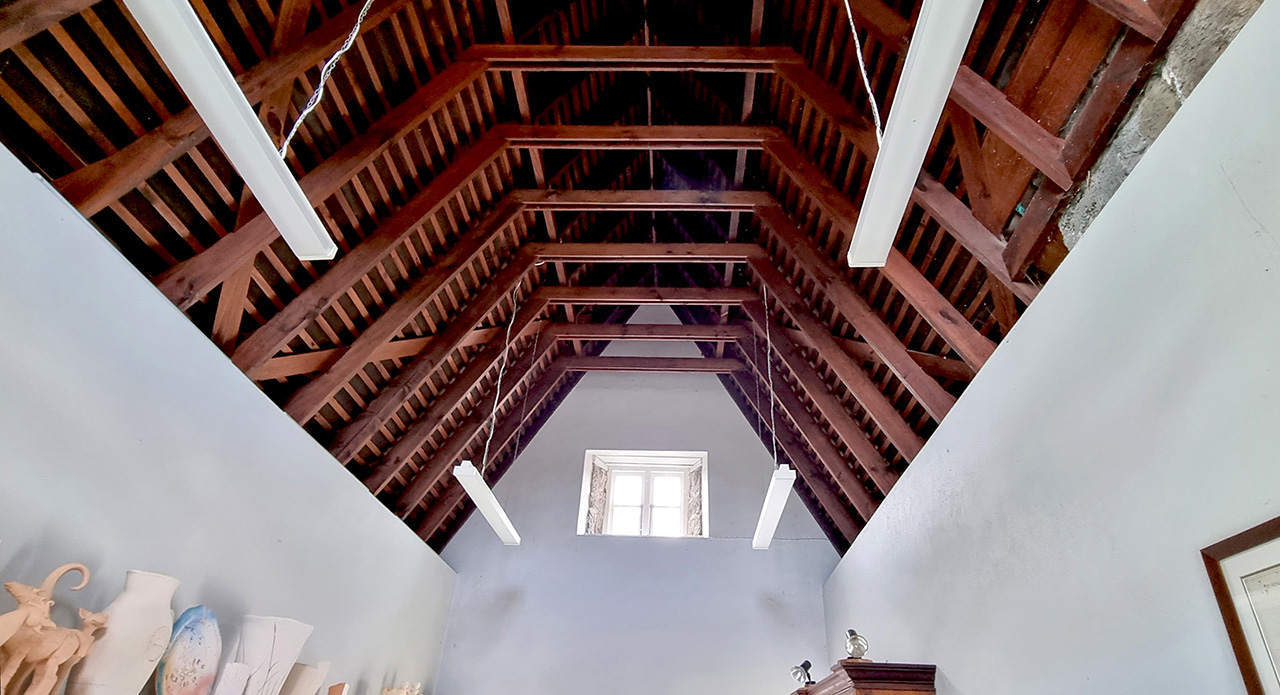
The Council then approached the New Zealand Historic Places Trust (NZHPT) in 1962 for support in preserving the building, however restoration work did not commence until 1968. This involved restoration of the 1845 stone portion of the building, replacing the corrugated iron roof with shingles, and relining the interior with concrete to strengthen the structure. The attic floor was also removed to create a single open room, and the roof trusses were replaced. Over the years the original sandstone portions of the building had been replaced with timber lean-tos, however these were in bad repair and were removed during the restoration work, with the door on the eastern side of the building boarded up. In 1973, the site was landscaped with paving to indicate the footprint of the early structure - the eastern and western wings of Captain Cooke’s original house. It had initially been proposed to relocate the Vicarage building to a site at St Mary’s Church in order to utilise the whole section at Te Henui for pensioners’ flats, however this was avoided.
The Te Henui Vicarage building is currently in use by the New Plymouth Potters Incorporated, who have been leasing the building since 1973 as a gallery and shop to showcase their creations. They constructed a building to the rear of the vicarage in 1973 which is used as the pottery rooms, and extended it in 1979 and 2000. A second-hand mantelpiece and fire surround for the Vicarage was purchased at auction and installed in 1974, to replace that removed during the earlier restoration work. In 2002 the shingled roof was replaced, and the interior was cleaned and repainted.
The Te Henui Vicarage remains a treasured historic site, not only to the residents of New Plymouth (who in 1998 voted it in the top 10 favourite heritage buildings in the town), but to New Zealand’s Anglican community.